
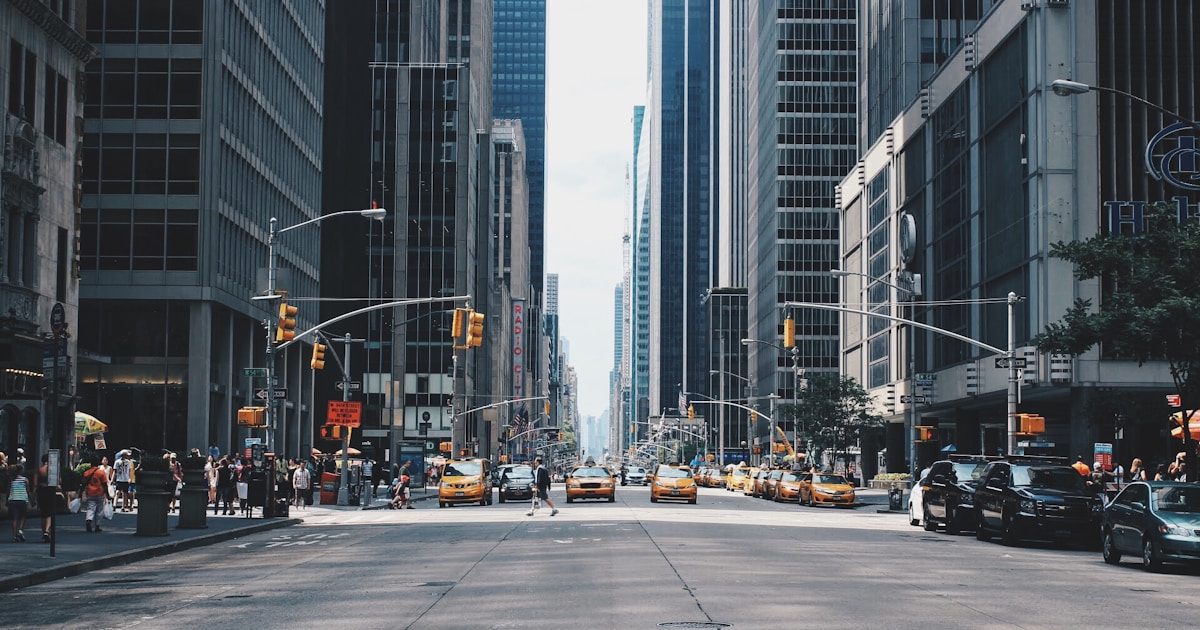
In Toronto, 43% of residents never see their neighbors. Thirty-seven percent report feeling lonely at least three times a week. The city was named the loneliest in Canada in 2024. Yet beneath a stretch of concrete expressway in the city's downtown core, something unexpected has been happening. A public space called The Bentway — carved out of the infrastructure beneath the Gardiner Expressway — has been quietly demonstrating that where people gather may matter as much as whether they want to.
According to an evaluation published in the Canadian Journal of Public Health in 2026 by Nadha Hassen and colleagues at the University of Toronto's Dalla Lana School of Public Health, 64% of visitors to The Bentway's programming season reported feeling more socially connected after their visit. Sixty-seven percent engaged in conversation with other visitors. Nearly half of all visitors were children, youth, or seniors — demographics that typically account for only 20% of foot traffic in surrounding neighborhoods.
These findings point toward a question that loneliness researchers are increasingly asking: what if social isolation is not just a psychological problem, but partly an architectural one? Most interventions for loneliness target the individual — cognitive behavioral therapy, social skills training, group programs. But a growing body of research published in 2026 suggests that the physical environment where people live, walk, and spend their days may be an equally powerful lever for connection or disconnection.
The Vanishing Third Place
In 1989, the sociologist Ray Oldenburg coined the term "third place" to describe the informal public gathering spots — cafes, barber shops, parks, libraries, pubs — that exist between the "first place" of home and the "second place" of work. Oldenburg argued that these spaces were essential infrastructure for community life: they provided low-stakes opportunities for repeated, unplanned encounters with the same people, which is precisely how research shows friendships actually form.
In the decades since, those spaces have been vanishing. Robert Putnam documented the trend in Bowling Alone (2000), tracing the decline of civic organizations, community centers, and shared public life. More recently, urban development patterns have compounded the problem: car-dependent suburbs, the loss of walkable commercial districts, and the rise of private indoor entertainment have all reduced the frequency of casual, face-to-face encounters between neighbors.
What makes the latest research notable is that it moves beyond documenting the decline. Six studies published between January and April 2026, across four countries, have attempted to measure precisely how different features of the built environment relate to loneliness — and the findings suggest that specific, modifiable aspects of neighborhoods may meaningfully shape people's social lives.
What Your Daily Routes Reveal About Your Friendships
One of the most intriguing findings comes from Turku, Finland. In a study published in the International Journal of Health Geographics in January 2026, Taiyo Ishikawa, Marketta Kytta, and Tiina Rinne surveyed 386 participants using a Public Participatory Geographic Information System (PPGIS) — a mapping tool that allowed respondents to mark the locations of their daily activities, social encounters, and relationship formation on a digital map.
The researchers drew a distinction that most loneliness research overlooks: the difference between forming new relationships and maintaining existing ones. These are fundamentally different social processes. Forming a new friendship requires repeated, unplanned encounters in shared space — what friendship researchers call "proximity" and "repeated unstructured contact." Maintaining an existing friendship is more flexible and can happen through intentional visits, phone calls, or digital communication.
What Ishikawa and colleagues found was that the built environment influenced these two processes differently. Walkability near home supported both forming and maintaining ties. But parks and green spaces near people's daily destinations — their routes to work, grocery stores, or gyms — were particularly important for new relationship formation. Urban residence, meanwhile, supported maintaining existing relationships but showed no significant association with forming new ones.
The implication is worth pausing on. If you want to help people maintain the friendships they already have, dense urban living works reasonably well. But if you want to help people make new friends — the process that Jeffrey Hall's research suggests requires roughly 200 hours of contact — the design of the spaces along their daily routes may be critical.
The 100-Meter Rule: How Close Green Space Needs to Be
How close does nature need to be to your front door before it affects your social life? A study from the EPIPorto cohort in Portugal offers one answer: about 100 meters.
Mariana Ramos Castro and colleagues, publishing in Health & Place in January 2026, analyzed data from 657 urban adults in Porto. Using the Normalized Difference Vegetation Index (NDVI) — a satellite-based measure of vegetation density — and species richness data from biodiversity databases, the researchers measured greenery and biodiversity at three distances from each participant's home: 100 meters, 300 meters, and 500 meters. Loneliness was assessed using the UCLA Loneliness Scale.
The findings showed a clear distance gradient. Greater vegetation within 100 meters of home was associated with lower loneliness levels. Biodiversity — measured as the richness of plant and animal species — showed meaningful associations at 300 and 500 meters. Blue space, such as rivers or fountains, showed no significant relationship with loneliness at any distance.
The researchers were careful to note that their cross-sectional design cannot establish causation. It is possible that less lonely people choose to live near green space, rather than green space reducing loneliness. But the specificity of the distance findings — the 100-meter threshold for vegetation, the wider radius for biodiversity — suggests something more than simple residential self-selection. As the authors wrote, the results indicate that "urban greening and biodiversity preservation may help mitigate loneliness."
A More Complicated Picture from Chicago
Not all built environment features are protective, however — and even green space evidence is mixed. A study published in Health & Place in March 2026 by Liang Cai, Chunwu Zhu, and Kathleen Cagney at the University of Chicago used a different and innovative approach: ecological momentary assessment. Rather than asking people about their loneliness in general, the researchers tracked 111 older adults across more than 7,000 geolocated assessments, measuring momentary loneliness as participants moved through different environments in real time.
The researchers extracted streetscape features from Google Street View images and examined points of interest near each assessment location. They found that hospital-dense environments, transit amenities, and vehicular traffic were positively linked to momentary loneliness. Environments dominated by cars and institutional buildings appeared to make people feel more isolated in the moment, even if they weren't chronically lonely.
Critically, the study found only limited evidence that green space was protective against momentary loneliness. The authors suggested that "age-friendly urban planning should attend to everyday activity spaces in addition to residential neighborhoods" — and that reducing environmental stressors may be as important as increasing environmental amenities.
Every Amenity Within Walking Distance Matters
Perhaps the most striking quantification of the neighborhood-loneliness relationship comes from Philadelphia. Amy Auchincloss and colleagues, publishing in BMC Public Health in April 2026, tracked 346 first-generation Chinese immigrants over three years, with baseline data collected from October 2018 to January 2020. The researchers used a novel method: rather than relying on administrative data for amenity locations, they crowd-sourced the information from the participants themselves, who mapped the grocery stores, healthcare providers, places of worship, and leisure venues they actually used.
Loneliness was measured using the UCLA 3-item Loneliness Scale at both baseline and three-year follow-up. At baseline, 25.1% of participants met the threshold for loneliness. At follow-up, that figure had dropped to 4.6% — a dramatic decline that likely reflects a combination of factors, including the end of pandemic-era isolation.
But the amenity relationship held even after controlling for other variables. Each additional nearby amenity was associated with a loneliness decrease, and the effect was distance-dependent: 21% at 400 meters, 16% at 800 meters, and 13% at 1,600 meters. The closer the amenity, the stronger the association. This suggests that walkable access to everyday destinations — not just their existence somewhere in the city — is what matters for social connection.
The study has clear limitations. It focused on a specific immigrant population in a single city, and the observational design cannot prove causation. But the consistency of the distance gradient and the specificity of the amenity types examined lend credibility to the central finding: the walkable infrastructure of daily life is meaningfully associated with whether people feel connected or isolated.
When Design Becomes Intervention: Cohousing and Public Space
If the observational evidence suggests that neighborhood design shapes loneliness, two studies from 2026 examine what happens when spaces are deliberately designed to promote connection.
The Bentway: Reclaiming Infrastructure for Community
The Bentway evaluation mentioned at the opening of this article is part of a broader initiative called "Rx for Social Connection," a partnership between The Bentway, the design firm Gehl, and the University of Toronto's Dalla Lana School of Public Health. The project explicitly treats public space as a health intervention, informed by the same loneliness epidemiology that drives clinical research.
The 2024 Softer City programming season — running from May to October — offered free art installations, performances, and recreational activities in the transformed underpass. The evaluation by Hassen and colleagues found that 71% of visitors reported improved physical health, 62% reported improved mental health, and 64% reported feeling more socially connected. Public art areas functioned as what the researchers called "stickier spaces" — environments that encouraged visitors to stay longer and engage in more social interaction.
What makes The Bentway notable is not just the outcomes but the setting. This is a space that was, by conventional urban standards, hostile to human connection — a highway underpass. Its transformation suggests that the barrier to better social infrastructure may not be a lack of available space, but a lack of imagination about what existing spaces could become.
Senior Cohousing: Building Loneliness Resistance into Architecture
A different approach emerges from a study of senior cohousing communities. Maria Luisa Delgado-Losada and colleagues, publishing in Frontiers in Public Health in April 2026, compared 83 older adults living in cohousing arrangements with 88 living in traditional single-family homes. Cohousing residents shared common spaces — kitchens, gardens, activity rooms — while maintaining private living quarters.
Despite reporting more chronic health conditions than the comparison group, cohousing residents showed less social loneliness, greater perceived social support, and better performance on verbal episodic memory and semantic fluency tests. These differences persisted after controlling for socioeconomic status — suggesting that the housing model itself, not just the financial capacity to choose it, was associated with the outcomes.
The researchers described cohousing as an "ecosystem of active reciprocity" — a built environment that structurally promotes the kind of casual, repeated, low-effort social contact that loneliness research identifies as protective. The self-selection problem is real: people who choose cohousing may already be more socially oriented. But the consistency of the findings across multiple outcome measures suggests the architecture itself plays a role.
What the Evidence Does Not Tell Us
It would be premature to conclude that urban planning can "solve" loneliness. Several important limitations run through this body of research.
First, most of these studies are cross-sectional. The Porto green space study, the Turku walkability study, and the cohousing comparison all captured a single point in time. They can show associations but cannot prove that changing the built environment would reduce loneliness. Longitudinal and experimental designs are needed — and they remain rare.
Second, self-selection bias is difficult to eliminate. People who are already more social may choose to live in walkable neighborhoods or cohousing communities. The Philadelphia study's longitudinal design is stronger on this point, but even it cannot fully rule out confounding factors.
Third, the evidence from Chicago reminds us that not all environmental features are straightforwardly beneficial. Green space, the most intuitively promising intervention, showed limited protective effects in the CHART study's momentary assessments. The relationship between built environment and loneliness appears to be more nuanced than "add parks, reduce isolation."
Finally, individual psychology still matters. The extensive evidence on cognitive behavioral approaches to loneliness — including the maladaptive social cognition patterns identified by John Cacioppo — suggests that environmental design is necessary but not sufficient. A beautifully designed public space cannot override the hypervigilance to social threat that characterizes chronic loneliness. The most effective approaches will likely combine environmental and psychological interventions.
Loneliness as a Design Problem
What these six studies collectively suggest is a shift in how we think about loneliness. The dominant framing for the past two decades has been medical and psychological: loneliness as a health risk factor, loneliness as a cognitive distortion, loneliness as something that happens inside individuals. That framing has produced important insights — the biological mechanisms documented by researchers like Steve Cole and Naomi Eisenberger, the intervention evidence synthesized in major meta-analyses.
But it has also obscured a complementary truth: loneliness is shaped by the physical infrastructure of daily life. The walkability of your street, the vegetation within 100 meters of your door, the amenities within a 10-minute walk, the design of the public spaces you pass through — these features of the built environment are not merely background. They are, according to a growing body of evidence, active determinants of whether casual encounters happen, whether neighbors become acquaintances, and whether acquaintances become friends.
The WHO Commission on Social Connection, in its 2025 midpoint report, called for interventions that address the structural conditions of social isolation — not just individual coping strategies. The research reviewed here suggests that urban planning and architectural design belong in that conversation. A park along someone's commute route. A grocery store within walking distance. A cohousing community designed around shared space. An expressway underpass reimagined as a gathering place. These are not substitutes for therapy or social programs, but they may be the environmental conditions that make those programs — and the spontaneous social encounters that underpin all friendship formation — more likely to succeed.
See the Research in Action
YaraCircle is built on the friendship science we cover here.